This guide puts the local name next to the English one, so you’ll know what’s on the end of your line. We also explain the seasonal rules for safi and sheri, and why they matter.
- Hamour is a grouper, sheri is a spangled emperor, safi is a rabbitfish and kanaad is kingfish.
- Typical catch weights are local guidance, not guarantees or species maximums.
- Historical Abu Dhabi assessments show why hamour and sheri need protection.
- The annual safi and sheri closure runs from 1 March to 30 April. Check the latest rules before fishing.
- Winter is a key season for kingfish and cobia; several other species occur year-round.
01 · A name to know
Why most UAE fish names are Arabic
People have fished the Gulf for a very long time, and many people here use Arabic names for fish. You’ll hear them at the fish market.
Some names describe more than one fish. Hamour, for example, covers several kinds of grouper. Spellings and usage vary, so a local name alone is not always enough to identify a species.
02 · Beneath the surface
Types of fish in the UAE you can catch off Dubai
These are familiar fish in our local guide, starting with queenfish, one of the most common. You won’t encounter every species on every outing. The weights below describe typical local catches; larger examples are exceptional.
Queenfish (dhal’a)
Queenfish are very common in catch’s local guide and can be encountered all year. Most weigh 2 to 7 kg, and larger fish reach about 11 kg. Look around coastal structures and islands, and at the mouths of channels.
Queenfish are fast, and they often jump when hooked. They’re great fun on a light rod with a lure that you cast out and wind back in.
Explore the queenfish guide ↗Kanaad (kingfish)
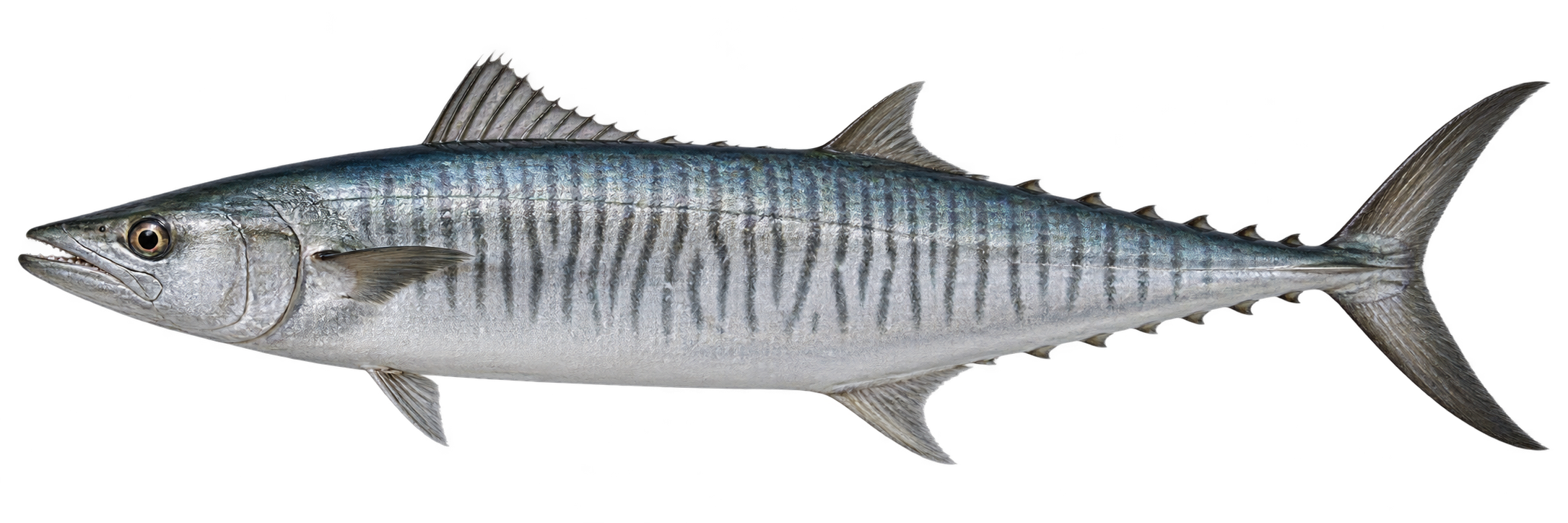
Most people in Dubai call this fish kingfish. Its English name is the narrow-barred Spanish mackerel, and its Arabic name is kanaad. Typical local catches weigh 3 to 15 kg, with exceptional fish reaching about 40 kg.
Kanaad move through open water, both close in and further offshore, and around wrecks. Trolling means pulling lures or live bait behind a moving boat. Kingfish are more common in winter, but we often catch them in summer too. A kanaad has a mouth full of teeth, so leave unhooking to an experienced handler.
Species size reference: FishBase. The scale drawing shows a large example, not a minimum size or a typical local catch.
Explore the kingfish guide ↗Hamour (grouper)
Hamour is the name for several groupers, mainly the orange-spotted grouper. Typical local catches weigh 3 to 15 kg, and larger fish reach about 20 kg.
Hamour hide in caves in rocky reefs and around deep wrecks, staying near the bottom. Bottom fishing with fresh fish or squid means dropping bait to the seabed over a reef. Hamour has been heavily affected by overfishing; the conservation section below explains the historical evidence.
Explore the grouper, mainly orange-spotted grouper guide ↗Barracuda (gid)
The local name for barracuda is gid. Typical catches weigh 3 to 10 kg, and larger fish reach about 15 kg. They occur from near the coast out to offshore reefs.
Barracuda are fast hunters with sharp teeth. Trolling or casting a long, shiny lure are common methods. Leave handling to someone experienced.
In our crew’s years of fishing UAE waters, we haven’t encountered an issue with ciguatera in barracuda. Ciguatera is associated with toxins that accumulate in tropical and subtropical reef fish. Our experience isn’t a guarantee that every fish is safe to eat.
Read the CDC’s ciguatera guidance ↗
Explore the barracuda guide ↗Trevally (jesh)
Locals call trevally jesh. Typical catches weigh 1 to 5 kg, and they can be encountered all year. Look around artificial reefs and shipwrecks.
Trevally pull hard for their size. Jigging means lifting and dropping a metal lure near the bottom. Bottom fishing with squid or shrimp is another approach.
Explore the trevally guide ↗Snapper
Several kinds of snapper go by the local name naisara. Typical local catches weigh 1 to 5 kg, and they can be encountered all year. They live around deep rocky ground and coral reefs.
Snapper can suit beginners using bottom-fishing tackle with squid or shrimp. The name covers more than one species, so identification matters.
Explore the snapper guide ↗Sheri (spangled emperor)
Sheri is the local name for the spangled emperor, a popular eating fish here. Typical catches weigh 1 to 5 kg. Look over sandy ground near coral reefs and in coastal waters.
Bottom fishing with fresh squid or shrimp is a common method. The annual safi and sheri fishing closure runs from 1 March to 30 April; check current restrictions before targeting them.
MOCCAE’s seasonal closure guidance ↗
Explore the spangled emperor guide ↗Safi (rabbitfish)
Safi is the local name for rabbitfish. They feed in shallow coastal water. A habitat description is not permission to fish: check local access rules before casting anywhere, including around Al Mamzar.
Safi have sharp fin spines, so avoid handling them yourself. The annual fishing closure for Arabian safi and sheri runs from 1 March to 30 April.
Sultan Ibrahim
Sultan Ibrahim is a local name used for small goatfish and red mullet. Typical catches weigh just 0.2 to 0.6 kg. They live over shallow sandy and muddy ground near the coast.
A light rod and small bait are the usual approach. Their size makes them an approachable target for first-timers, although no fish is guaranteed to bite.
Explore the goatfish and red mullet guide ↗Sea bream
Locals use several names for sea bream, including sha’m and faskar, depending on the species. Typical catches weigh 0.5 to 2 kg, with winter the main season in our local guide. They live on coastal reefs, rocky ground and around harbour walls.
Sea bream can be cautious feeders. Light tackle and fresh shrimp or small pieces of squid are useful starting points.
Explore the sea bream guide ↗Cobia (sikin)
Locals call cobia sikin; sikl is another spelling you may see. They are less common than queenfish in our guide and mainly a winter target. Typical catches weigh 5 to 30 kg, with exceptional fish reaching about 60 kg.
Cobia favour deep offshore water and wrecks. They can look a little like a small shark at first glance, and they fight hard. Heavy jigging or live bait are common methods.
Explore the cobia guide ↗03 · Keep this handy
UAE fish names at a glance
You’ll see these names spelled a few different ways, including jid for barracuda and sikl for cobia. Some names cover several species.
| Name you’ll hear | English name | Typical weight | Where to look | Fishing method |
|---|---|---|---|---|
| Dhal’a | Queenfish | 2–7 kg | Coastal structures, islands and channel mouths | Casting lures or light spinning |
| Kanaad | Kingfish (narrow-barred Spanish mackerel) | 3–15 kg | Open water and wrecks | Trolling |
| Hamour | Grouper, mainly orange-spotted grouper | 3–15 kg | Rocky reef caves and deep wrecks | Bottom fishing or deep jigging |
| Gid | Barracuda | 3–10 kg | Coasts and offshore reefs | Trolling or casting |
| Jesh | Trevally | 1–5 kg | Artificial reefs and shipwrecks | Jigging or bottom fishing |
| Naisara | Snapper | 1–5 kg | Deep rocky ground and coral reefs | Bottom fishing |
| Sheri | Spangled emperor | 1–5 kg | Sandy ground near coral reefs | Bottom fishing |
| Safi | Rabbitfish | Small; varies by species | Shallow coastal water | Bottom fishing |
| Sultan Ibrahim | Goatfish and red mullet | 0.2–0.6 kg | Shallow sandy and muddy coastal ground | Light rod and small bait |
| Sha’m or faskar | Sea bream | 0.5–2 kg | Coastal reefs, rocky ground and harbour walls | Light bottom fishing |
| Sikin | Cobia | 5–30 kg | Deep offshore water and wrecks | Heavy jigging or live bait |
Compare seasons, catch likelihood and weights in the fish guide ↗
04 · Leave some for tomorrow
How the UAE protects its most fished species
MOCCAE describes an annual fishing and trade ban on Arabian safi and sheri from 1 March to 30 April, during their breeding season. Do not target these fish during the closure; release accidental catches carefully and check the current rules before heading out. MOCCAE seasonal guidance.
Minimum sizes and location restrictions also matter. Check the applicable rules before keeping any fish. Our fishing licence guide explains where to start.
In EAD’s 2019 Abu Dhabi bulletin, the modelled adult-stock indicators for hamour and sheri were 7.1% and 11% of an unfished baseline. Both were below the 30% management reference line. This is historical evidence of pressure on the fishery, not a current count of fish across the UAE. EAD bulletin, tables 2–3.
Frequently asked questions
What types of fish are found in the UAE?
Fish found off Dubai include queenfish, kingfish, hamour, barracuda, trevally, snapper, sheri, safi, Sultan Ibrahim and sea bream. Cobia are also encountered, mainly in winter. Conditions and the fishing method shape what you might see.
What is sheri fish called in English?
Sheri is the spangled emperor.
What is hammour fish in English?
Hammour, which we spell hamour here, is a grouper. The local name covers several species, mainly the orange-spotted grouper.
Which fish is best to eat in the UAE?
Hamour and sheri are local favourites, but both have been affected by overfishing. Before keeping a fish, check species identification, seasonal restrictions and minimum size. Consider the health of the stock as well as the menu.
Is barracuda safe to eat in the UAE?
In our crew’s years of fishing UAE waters, we haven’t encountered an issue with ciguatera in barracuda. Ciguatera is associated with toxins that accumulate in tropical and subtropical reef fish. Our experience isn’t a guarantee that every fish is safe to eat. CDC guidance.
Can I keep the fish I catch?
Only where the rules permit it: check the species, season, minimum size and location restrictions. Release prohibited or undersized fish carefully. A catch is not automatically a keeper.
When is the best time to catch kingfish in Dubai?
We catch kingfish more often in winter, but regularly in summer too. Your guide checks where the bait fish are moving before choosing a spot.
Sources and scope
Local names, typical weights and fishing methods: catch’s supplied fish guide. These are practical expectations rather than guaranteed catches. Names can cover more than one species.
Conservation: Environment Agency – Abu Dhabi’s 2019 bulletin. Seasonal closure: MOCCAE. Kingfish size: FishBase. Ciguatera: CDC. Reviewed 28 October 2026.
Now you know who’s down there
Next time you walk past the ice at the fish market, you’ll know a kanaad from a sheri.
Read next: deep sea fishing in Dubai ↗