Deep offshore water and wrecks.
In deep offshore water and around deeper wrecks.
Your guide checks the conditions and picks a permitted spot.
The catch field guide · No. 07
Scientific name: Rachycentron canadum
Cobia can pull hard when hooked.
A broad, flat head and a long dark body set cobia apart. Look closely at the pale stripes along its sides and the small separate spines ahead of the dorsal fin.
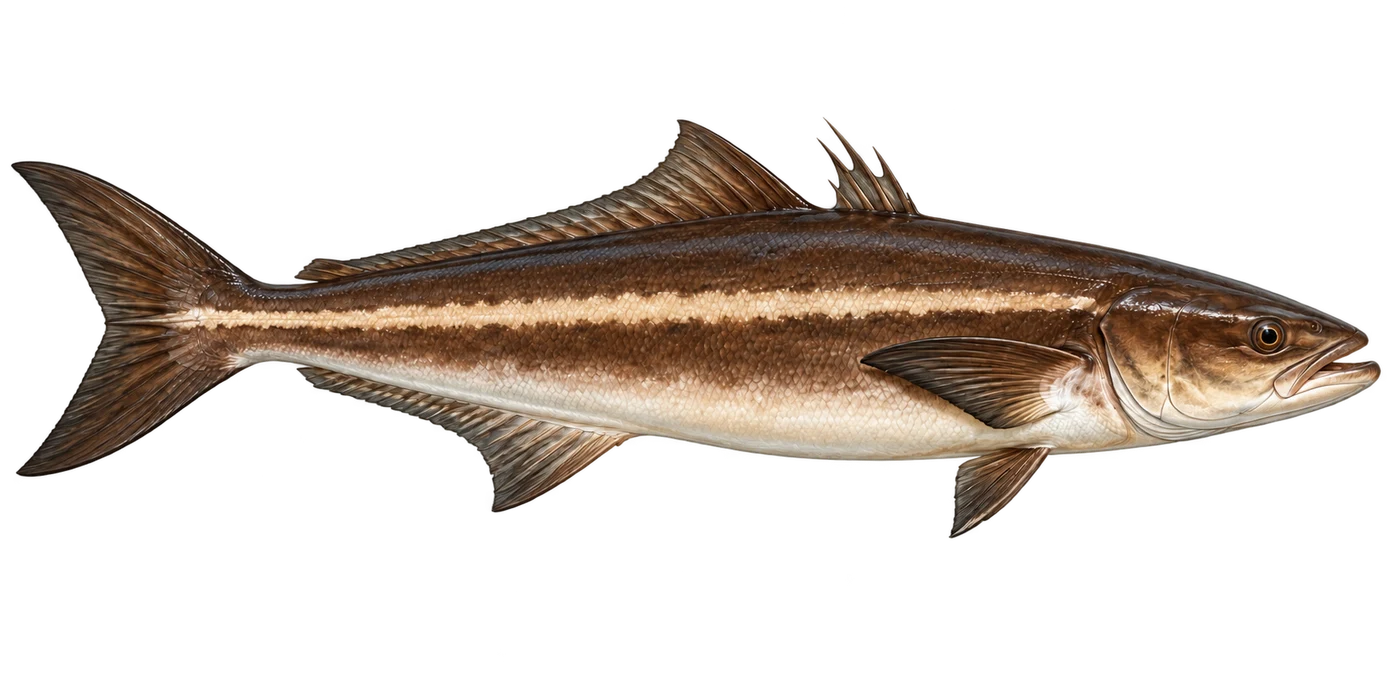
Look for
The local picture
In deep offshore water and around deeper wrecks.
Your guide checks the conditions and picks a permitted spot.
These are the weights our crew usually sees.
Larger fish can reach 60 kg; this is not the typical catch size.
Mainly in winter. Your chances change with the weather and where you fish.
Fishing methods
Work a heavy metal lure through deep water, or try live bait. Your guide will help you handle the rod when a cobia takes.
Same fish, different names
Cobia; black kingfish; ling; lemonfish. Some common names are shared with unrelated fish; the scientific name removes the ambiguity.
Species reference ↗From sea to supper
Firm flesh works well as thicker portions. Grilling or pan-searing are preparations to discuss with your cook once the fish has been assessed.
The crew will advise what can be kept on the day.
For identification and habitat, see Species reference. Local catch likelihood, weights, seasonality, habitat and methods: catch’s fish information guide. What you catch still depends on the day. You may hear other local names too.