Coasts, islands and offshore reefs.
Near the coast, islands and offshore reef structures.
Your guide checks the conditions and picks a permitted spot.
The catch field guide · No. 06
Scientific name: Sphyraena jello
Barracuda move quickly after bait fish.
You’ll recognise its long silver body and sharp teeth. Barracuda is a group name; this guide uses pickhandle barracuda as the example, rather than treating every barracuda as the same species.
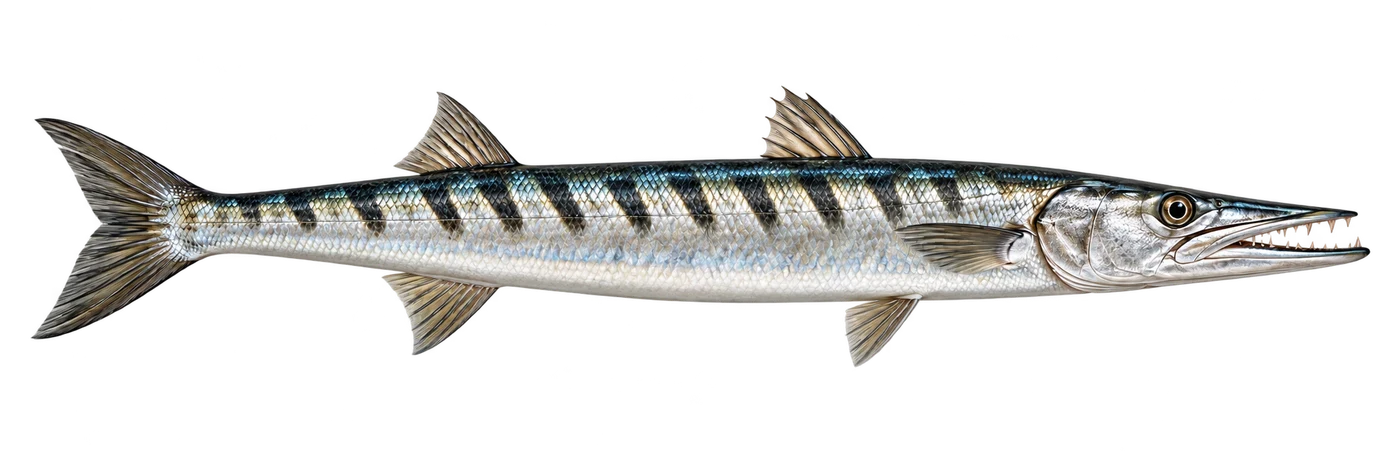
Look for
The local picture
Near the coast, islands and offshore reef structures.
Your guide checks the conditions and picks a permitted spot.
These are the weights our crew usually sees.
Larger fish can reach 15 kg; this is not the typical catch size.
All year. Your chances change with the weather and where you fish.
Fishing methods
Trail a long, shiny lure behind the boat, or cast it out and wind it back. Your guide uses a wire section near the hook to protect the line from teeth.
Same fish, different names
Pickhandle barracuda; yellowtail barracuda. Barracuda and sea pike are broader names and do not reliably identify the species.
Species reference ↗From sea to supper
Ask the crew whether the fish is suitable to retain before making dinner plans. Species, size and origin matter; the name barracuda alone is not enough to recommend it for the table.
The crew will advise what can be kept on the day.
For identification and habitat, see Species reference. Local catch likelihood, weights, seasonality, habitat and methods: catch’s fish information guide. What you catch still depends on the day. You may hear other local names too.