Deep wrecks and rocky drop-offs.
Deep shipwrecks, artificial reefs and rocky drop-offs.
Your guide checks the conditions and picks a permitted spot.
The catch field guide · No. 11
Scientific name: Seriola dumerili
An amberjack will make you work for it.
Amberjack head for cover when hooked, so your guide will help you keep them clear of the wreck. This guide shows greater amberjack, a species recorded in the Gulf.
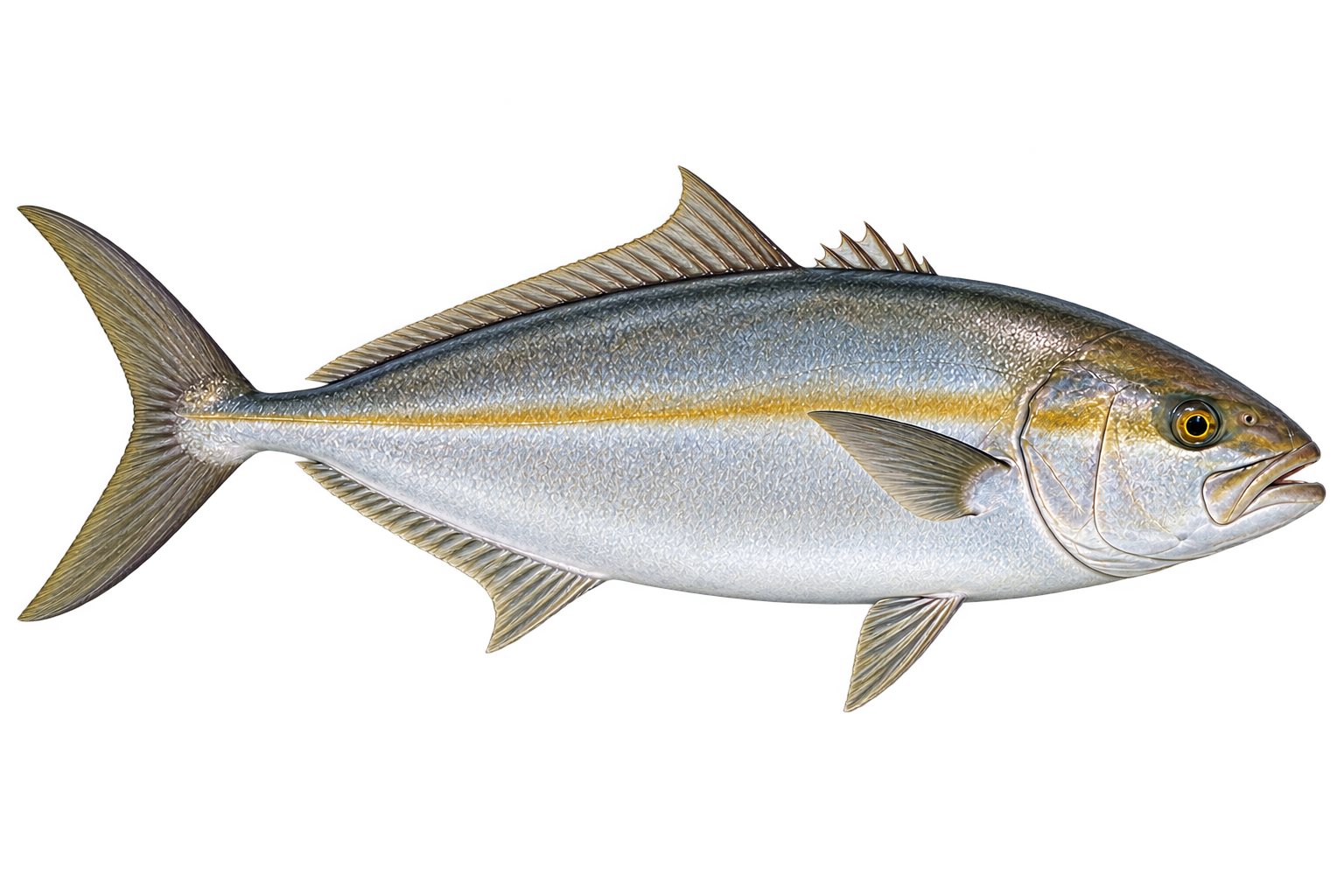
Look for
The local picture
Deep shipwrecks, artificial reefs and rocky drop-offs.
Your guide checks the conditions and picks a permitted spot.
These are the weights our crew usually sees.
Mainly in winter. Your chances change with the weather and where you fish.
Fishing methods
Your guide lowers a metal lure beside the wreck, then works it up through the water. Live bait is another option.
Same fish, different names
Greater amberjack; amberjack; greater yellowtail. Other amberjacks share some of these names.
Species reference ↗From sea to supper
Firm fillets suit grilling or pan-frying. Ask the crew about the fish you’ve caught before making dinner plans.
The crew will advise what can be kept on the day.
For identification and habitat, see Species reference. Local catch likelihood, weights, seasonality, habitat and methods: catch’s fish information guide. What you catch still depends on the day. You may hear other local names too.